
This start date is for any volunteers who are already a qualified diver up to advanced level (PADI or other organisation)
This start date is for any volunteers who have never scuba dived before or are at Open Water qualified diver level (PADI or other organisation)

This start date is for any volunteers who are already a qualified diver up to advanced level (PADI or other organisation)
This start date is for any volunteers who have never scuba dived before or are at Open Water qualified diver level (PADI or other organisation)
This start date is for any volunteers who are already a qualified diver up to advanced level (PADI or other organisation)
This start date is for any volunteers who have never scuba dived before or are at Open Water qualified diver level (PADI or other organisation)

This start date is for any volunteers who are already a qualified diver up to advanced level (PADI or other organisation)
This start date is for any volunteers who have never scuba dived before or are at Open Water qualified diver level (PADI or other organisation)
This start date is for any volunteers who are already a qualified diver up to advanced level (PADI or other organisation)
This start date is for any volunteers who have never scuba dived before or are at Open Water qualified diver level (PADI or other organisation)
This start date is for any volunteers who are already a qualified diver up to advanced level (PADI or other organisation)
This start date is for any volunteers who have never scuba dived before or are at Open Water qualified diver level (PADI or other organisation)
This start date is for any volunteers who are already a qualified diver up to advanced level (PADI or other organisation)

This start date is for any volunteers who have never scuba dived before or are at Open Water qualified diver level (PADI or other organisation)
This start date is for any volunteers who are already a qualified diver up to advanced level (PADI or other organisation)
This start date is for any volunteers who have never scuba dived before or are at Open Water qualified diver level (PADI or other organisation)
This start date is for any volunteers who are already a qualified diver up to advanced level (PADI or other organisation)
This start date is for any volunteers who have never scuba dived before or are at Open Water qualified diver level (PADI or other organisation)
This start date is for any volunteers who are already a qualified diver up to advanced level (PADI or other organisation)
This start date is for any volunteers who have never scuba dived before or are at Open Water qualified diver level (PADI or other organisation)

This start date is for any volunteers who are already a qualified diver up to advanced level (PADI or other organisation)
This start date is for any volunteers who have never scuba dived before or are at Open Water qualified diver level (PADI or other organisation)

This start date is for any volunteers who are already a qualified diver up to advanced level (PADI or other organisation)

This start date is for any volunteers who have never scuba dived before or are at Open Water qualified diver level (PADI or other organisation)
This start date is for any volunteers who are already a qualified diver up to advanced level (PADI or other organisation)
This start date is for any volunteers who have never scuba dived before or are at Open Water qualified diver level (PADI or other organisation)
Barefoot Conservation Science Report 2024
Introduction:
Barefoot Conservation is an Indonesian registered NGO (Yayasan Konservasi Jejak Kaki Indonesia: AHU-0004531.AH.01.04. Tahun 2018) working to conserve the unrivalled marine life of Raja Ampat, through monitoring, research and science training of the local community. Barefoot has been running since 2016 and has been collecting data on reef health, manta populations, marine debris and crown of thorns starfish for several years, providing invaluable long-term datasets of the ecosystem over time. Our scientific output is constantly evolving and expanding and we now have 11 science projects running in parallel. This report provides an update on the progress of 7 of our major science projects in 2025.
Our Science team at Barefoot currently consists of Project Scientist Reyhan Arifin (Jenderal Soedirman University), Project Scientist Mathilda Bates (James Cook University), Project Scientist Nikolai Madland Shorter (University of Cambridge), Science Officer Septya Putri (Jenderal Soedirman University) and the Head of Science Josie Chandler (James Cook University) who is working remotely from Australia. Our Head of Operations (Iris Uijttewaal), Dive Manager (Matt Perrodou), and Divemasters (Reven and Markus) are also heavily involved in the science projects. Other scientists who have been involved with the science at Barefoot during 2024 but are no longer working us are: Lena Pollett (Plymouth University), Max Kimble (Plymouth University), Corey Cathcart (Bournemouth University), Issy Inman (Swansea University). We also thank Erika Gress (James Cook University) for her involvement with Barefoot Science and dedication to the reefs of Raja Ampat during 2024.
Last year in 2023 we commenced new projects, most notably setting up a Coral Ecology and Bleaching Project and extensive cyanobacteria monitoring. This year in 2024 we have built upon these projects with the addition of installing temperature loggers and setting up new monitoring techniques such as large-scale photogrammetry, we have also started employing AI technologies into some of our data analysis (ReefCloud). In addition to Coral Bleaching Project expansion this year we have also included two new monitoring projects – monitoring prevalence of coral-killing sponge (Terpios hoshinota) and monitoring coral spawning. This year has also seen new collaborations commence which we hope to build on further in 2025. All of these projects will be outlined in more detail within this report, including background, progress and goals for 2025.
We have continued to progress with the long-term data collection of Reef Check, hitting our monitoring targets each quarter and adding bonus sites to our data bank. We have also contributed to ongoing data collection within a wide variety of projects including marine debris, manta rays, black corals, crown-of-thorns starfish and more. However, with the emerging threats of marine heatwaves and deteriorating water quality becoming more and more problematic for this region, we have put the majority of our efforts into two focal projects this year: 1) Coral Ecology and Bleaching Project and the 2) Water Quality and Cyanobacteria Monitoring project.
One of the key projects we have been working towards this year has been monitoring the presence of cyanobacteria & macroalgae in the Dampier Strait, which we have recognised to be increasing dramatically in recent years. Rapid growth of cyanobacteria and macroalgae is an issue linked to nutrient pollution which is known to have caused significant irreversible damage to coral ecosystems in the Caribbean and other parts of the Indo-Pacific. This year we contracted water testing of key water quality parameters and have highlighted our concerns of poor water quality to BLUD UPTD during meetings and a separate water quality report.
Unfortunately, in recent months we have witnessed a severe bleaching event unfold in the western side of the Dampier Strait, starting in November 2024. It was heartbreaking to observe mass bleaching at such magnificent reefs and unfortunately we have already witnessed some mortality of corals as a result of this event. In 2023 we had established a comprehensive coral bleaching monitoring programme for Raja Ampat, coordinated with NOAA Coral Reef Watch collaborators, and so we have been able to capture the event unfold and we continue to collect unprecedented data on this event into 2025. We continue to work with provincial government and other stakeholders on the status of Raja Ampat reefs and strive to inform management decisions in the region.
All of the projects currently running at Barefoot Conservation, collect observational data only, and the results of the research remain within Indonesia. Correct permissions were sought from both Chief of Arborek Village, Bapa Juan Mambrasar , and Head of BLUD, Pak Safry, before commencing any of the projects mentioned in this report.
For any questions regarding the data, findings or projects mentioned in this report, please contact our Head of Science, Josie Chandler, via:-
REPORTS (click links below)
Barefoot Conservation Science Progress Report 2024-2025 (English)


Barefoot Conservation Science Report 2023
Introduction:
Barefoot Conservation is an Indonesian Yayasan (Yayasan Konservasi Jejak Kaki Indonesia: AHU-0004531.AH.01.04. Tahun 2018) working to conserve the unrivalled marine life of Raja Ampat, through monitoring, research and science training of the local community.
Barefoot has been running since 2016 and has been collecting data on reef health, manta populations, marine debris and crown of thorns starfish for several years, providing invaluable long-term datasets of the ecosystem over time.
In 2022 we commenced several new projects, most notably a reef restoration project, but also a black corals project, cyanobacteria monitoring and anchor damage monitoring. This year, we have continued improving and expanding our scientific output with the addition of a Coral Ecology and Coral bleaching monitoring project.
All of these projects will be outlined in more detail within the report below, including background, progress and goals for 2024.
Our Science team at Barefoot currently consists of Lead Scientist Lena Pollett (Plymouth University), Project Scientist Reyhan Arifin (Jenderal Soedirman University), Science Interns Max Kimble (Plymouth University), Corey Cathcart (Bournemouth University) and the Head of Science Josie Chandler (James Cook University) who is working remotely from Australia. Our Head of Operations (Iris Uijttewaal), Dive Manager (Matt Perrodou), and Divemasters (Ferry and Markus) are also heavily involved in the science projects.
This year we focused on both old and new projects. We have continued to progress with the long-term data collection of Reef Check, hitting our monitoring targets each quarter and adding bonus sites to our data bank. With the new projects, we have refined methodology & began using new software to analyse these exciting datasets. Furthermore, with the threat of a bleaching event in Raja Ampat at the end of 2023 we commenced a monitoring project to track the reef status during the anticipated warming.
One of the key projects we have been working towards this year has been monitoring the presence of cyanobacteria & macroalgae in the Dampier Strait, which we have recognised to be increasing dramatically in recent years. Rapid growth of cyanobacteria and macroalgae is an issue which has caused significant irreversible damage to coral ecosystems in the Caribbean and other parts of the Indo-Pacific. Therefore, we are currently working with the government to investigate this environmental change and exploring potential solutions.
This year has also seen new collaborations commence which we hope to build on further in 2024. This report provides an update on the progress of our major science projects in 2023.
All of the projects currently running at Barefoot Conservation, collect observational data only, and the results of the research remain within Indonesia. Correct permissions were sought from both Chief of Arborek Village, Bapa Juan Mambrasar , and Head of BLUD, Pak Safry, before commencing any of the projects mentioned in this report.
For any questions regarding the data, findings or projects mentioned in this report, please contact our Head of Science, Josie Chandler, via:-
REPORTS (click links below)
Barefoot Conservation Science Progress Report 2023-2024 (English)
Barefoot Conservation Science Progress Report 2023-2024 (Bahasa Indonesia)
This start date is for any volunteers who are already a qualified diver up to advanced level (PADI or other organisation)
This start date is for any volunteers who have never scuba dived before or are at Open Water qualified diver level (PADI or other organisation)

This start date is for any volunteers who are already a qualified diver up to advanced level (PADI or other organisation)

This start date is for any volunteers who have never scuba dived before or are at Open Water qualified diver level (PADI or other organisation)

This start date is for any volunteers who are already a qualified diver up to advanced level (PADI or other organisation)

This start date is for any volunteers who have never scuba dived before or are at Open Water qualified diver level (PADI or other organisation)

This start date is for any volunteers who are already a qualified diver up to advanced level (PADI or other organisation)

This start date is for any volunteers who have never scuba dived before or are at Open Water qualified diver level (PADI or other organisation)

This start date is for any volunteers who are already a qualified diver up to advanced level (PADI or other organisation)

This start date is for any volunteers who have never scuba dived before or are at Open Water qualified diver level (PADI or other organisation)

This start date is for any volunteers who are already a qualified diver up to advanced level (PADI or other organisation)

This start date is for any volunteers who have never scuba dived before or are at Open Water qualified diver level (PADI or other organisation)

This start date is for any volunteers who are already a qualified diver up to advanced level (PADI or other organisation)

This start date is for any volunteers who have never scuba dived before or are at Open Water qualified diver level (PADI or other organisation)

This start date is for any volunteers who are already a qualified diver up to advanced level (PADI or other organisation)

This start date is for any volunteers who have never scuba dived before or are at Open Water qualified diver level (PADI or other organisation)

This start date is for any volunteers who are already a qualified diver up to advanced level (PADI or other organisation)

This start date is for any volunteers who have never scuba dived before or are at Open Water qualified diver level (PADI or other organisation)

This start date is for any volunteers who are already a qualified diver up to advanced level (PADI or other organisation)

This start date is for any volunteers who have never scuba dived before or are at Open Water qualified diver level (PADI or other organisation)

This start date is for any volunteers who are already a qualified diver up to advanced level (PADI or other organisation)

This start date is for any volunteers who have never scuba dived before or are at Open Water qualified diver level (PADI or other organisation)

This start date is for any volunteers who are already a qualified diver up to advanced level (PADI or other organisation)
This start date is for any volunteers who have never scuba dived before or are at Open Water qualified diver level (PADI or other organisation)
This start date is for any volunteers who are already a qualified diver up to advanced level (PADI or other organisation)

This start date is for any volunteers who have never scuba dived before or are at Open Water qualified diver level (PADI or other organisation)
Barefoot Conservation Science Report 2022
Introduction:
Barefoot Conservation is an Indonesian Yayasan (Yayasan Konservasi Jejak Kaki Indonesia: AHU-0004531.AH.01.04. Tahun 2018) working to conserve the unrivalled marine life of Raja Ampat, through monitoring, research and science training of the local community. Barefoot has been running since 2012 and has been collecting data on reef health, manta populations, marine debris and crown of thorns starfish for several years, providing invaluable long-term datasets of the ecosystem over time.
Additionally, this year in 2022, several new projects have commenced, most notably a reef restoration project, but also a black corals project, cyanobacteria monitoring and anchor damage monitoring. All of these projects will be outlined in more detail below, including background, progress and goals for 2023.
Our Science team at Barefoot currently consists of three Indonesian marine science graduates: Afryan Maris Pappang Simon (Hasanuddin University of Makassar), Victor Hendrico (IPB University), Felicita Laura Annemarie (Victoria University of Wellington), a manta scientist from Plymouth University (UK) Lena Pollet, and the Head of Science Josie Chandler (James Cook University) who is working remotely from Australia.
Our Project Manager, dive instructor, divemasters and doctor are also heavily involved in the science projects.
Despite the struggles of Covid that affected our monitoring in 2020/2021, we have achieved a lot this year both within science and also community outreach and training. We reached our survey goals for Reef Check and have seen some promising results in the first year of our coral restoration project. Importantly, we have built a strong foundation for an even stronger 2023, with lots of exciting collaborations and several new projects due to commence in January 2023. This report provides an update on the progress of our major science projects in 2022.
All of the projects currently running at Barefoot Conservation, collect observational data only, and the results of the research remain within Indonesia. Correct permissions were sought from both Chief of Arborek Village, Bapa Juan Mambrasar , and Head of BLUD, Pak Safry, before commencing any of the projects mentioned in this report.
For any questions regarding the data, findings or projects mentioned in this report, please contact our Head of Science, Josie Chandler, via:-
REPORTS (click links below)
Barefoot Conservation Science Progress Report 2022-2023 (English)
Barefoot Conservation Science Progress Report 2022-2023 (Bahasa Indonesia)


Barefoot Conservation Liveaboard
Barefoot Conservation are now able to offer past, present and future volunteers/guests an amazing opportunity to join our liveaboard research expeditions in Raja Ampats Central, North and South locations.
Ahoy!
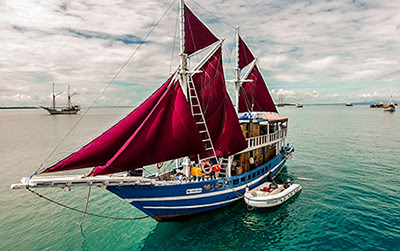
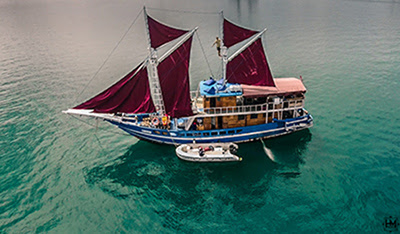
Welcome aboard the Ratu Laut liveaboard!
The Ratu Laut, one of the legendary Indonesian Phinisi boats, has been sailing the seas of Indonesia since 2008 as a surfing charter boat. In 2016 she was extensively renovated, equipped with modern facilities, a new engine and safety equipment to transform her into a scuba diving liveaboard boat. There are 4 cabins comfortable for up to 12 people. Two smaller cabins with two bunk beds in each cabin and we have two cabins with 4 bunk beds one of them is on the main deck. A cozy dining space and spaces to relax on deck provide an exciting liveaboard experience at an affordable price!
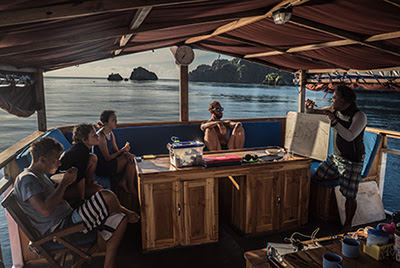

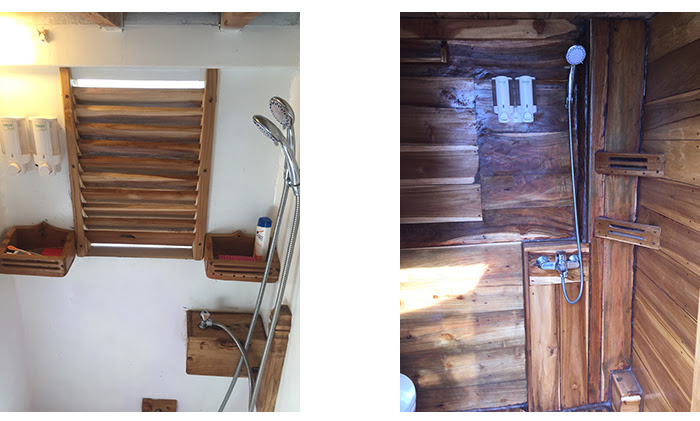


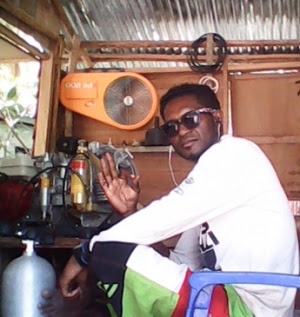


We have western style sit down toilets for those who like to read the paper on the toilet...

Theme night party, everyone dressed as a creature from the sea...can you guess who is what?

One of the accommodation beach bungalows at our Arborek basecamp

White Manta the Barefoot Conservation boat chilling, moored up at Arborek Island basecamp

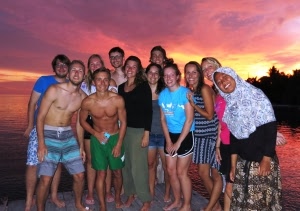
Watch amazing sunsets with a cold beer, at our private jetty.

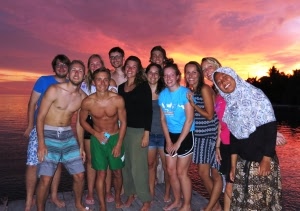
Some ex-volunteers and staff heading out to Daves Bar for a nice BBQ on a deserted beach.....what ever happened to Daves bar...anyone???.

Money from volunteers expedition fees buys new English school books for Arborek kids.

The Barefoot Conservation basecamp is located on Arborek island, Raja Ampat.
I had an amazing experience during my 8 weeks of volunteering with Barefoot Conservation in Raja Ampat. Barefoot gave me the opportunity to enjoy the local communities culture, teach local children english, through the marine science and survey work I learned a substantial amount about these bio diverse ecosystems while contributing to the conservation of them, and i was also able to dive in some of the most pristine reefs in the world, while living in paradise.

Barefoot Conservation's Mission & Goals
Mission:
Barefoot Conservation's mission is to work in partnership with the Raja Ampat local government, local Papuan Communities and stakeholders, to protect the coral reefs of Raja Ampat and the communities that rely on them.
This partnership is bonded by a willingness to make a real difference, and the understanding that research, survey dives and Marine Protected Areas cannot work unless accompanied by education and the sustained alleviation of poverty.
Our projects are designed to work at a grass roots level, thus making a real difference to real people, and a difference that each volunteer can see and be a part of.
Goals:
- To conduct marine underwater surveys using the Reef Check methodology, collecting data, for the use in advising local government, local communities and other NGO partners, on the health of coral reefs and marine life in Marine Protected Areas (MPA's).
- Produce a local Manta Ray Identification (ID) database, through underwater manta ray surveys. Sharing collected data with local government and NGO partners.
- Monitor the number of Crown of Thorns starfish (COTs) in the region, undertaking COTs removal dives during large outbreaks.
- Undertake educational programmes on environmental issues, sustainable fishing techniques (if necessary) and the economic benefits of MPA's.
- Increase quality of life and alleviate poverty in local communities, through our community projects - Education, Waste Management, Health Clinics, Family Planning, Dental Hygiene, Renewable Energy.
- Encourage entrepreneurial attitudes to deter from unsustainable destructive activities like Shark finning, Manta Ray gill raking or dynamite fishing.
Barefoot Conservation's Waste Management Programme
Barefoot Conservation Beach Clean- Maybe Less Glamorous but Still Incredible Rewarding
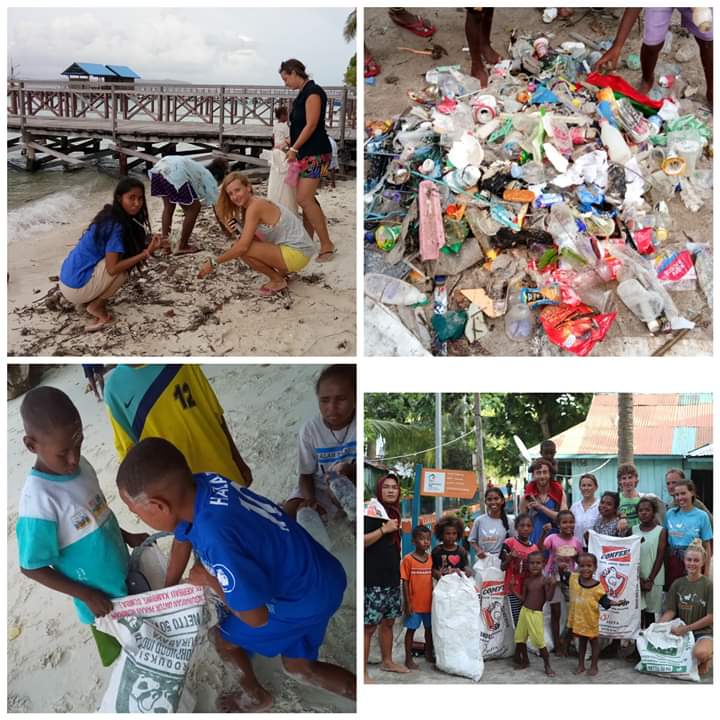
One of the greatest threats facing our oceans today is plastic waste, and it seems that there are few, if any, places left in the world that are unaffected by this issue. A major problem is with plastic wastes such as water bottles, sweet wrappers and plastic bags. They can take decades to degrade and even after this point they can remain within ecosystems as Nano-Plastics. Although beach clean ups may be less glamorous than releasing baby turtles, science diving and manta ray spotting, they are just as important, if not more important than all of these other activities.
Many marine creatures are often seen taking bites of plastic, before realizing what it is and spitting it out. Some however do not realize until it’s to late, this is a particular problem for many sea turtles such as the Leatherback who mistake plastic for one of their food sources jellyfish. Simply collecting the waste that washes up on the beach can have a huge impact on reef ecosystems, helping to prevent coral damage, ingestion by marine creatures and the release of harmful chemicals once the trash eventually starts to degrade.
Volunteers at Barefoot Conservation are asked to help out with beach clean-ups as often as possible. This not only sets a great example to the local community, but also allows participants to see the good they are doing by physically removing rubbish from the environment.



Anemone fish are omnivorous and can feed on undigested food from their host anemones.
Barefoot Conservation's Education Programme
English Lessons
Hello, Mister! How are you?!!!
That is what came out of a young Papuan boy’s mouth two days after his first English lesson with Barefoot Conservation. Sitting in his father’s boat during a slow ride on a fine Saturday afternoon, the boy waved and shouted the same greeting over and over again to BC staff. If you were his teacher, how would you feel? Happy? Of course. Proud? Most definitely.
One of BC’s community work programs is to run English courses both for children and adults. Taught in a friendly, easy-going environment, we aim to improve the Papuan children's English skills to help their chances of qualifying for higher education. And the adults to communicate better with the tourists they encounter through their local businesses (village shop, homestays, snorkeling tours etc..). Classes are run separately between children and adult and they include writing, listening, reading, and speaking. To make it easy to grasp, examples and exercises are made such that they relate to every-day life in Raja Ampat.
Our staff, Desiree, has performed two children sessions on Alphabets, Numbers 0-10, and Greetings. How many students would you expect to attend the first session? 10? 20 maximum? Exactly her thought but surprise, surprise! Almost 30 students showed up ranging from Year 1 to Year 7. All in one class. Worse, there were only enough notes for 20 students which in the end had to be shared between them (after all sharing is an act of love, isn’t it?). They were shy at first and after a quick Hangman session, Desiree won their hearts. Never in her life has she had students learning with such excitement. After nearly 1.5 hours of teaching, she almost lost her voice so that was the end of Session 1. Judging from how the students responded to the lesson, they appeared to be more excited in English in Maths (no offense to all Maths teachers out there).
Moving on to the second session three days after the first, Desiree did a quick review on the alphabets and numbers with a game. She wrote random letter-number combinations on the blackboard such as AB78, H2LK, etc. She then divided the class into two groups and each team pointed a member to race against the other team member to the blackboard and find the combination Desiree previously spelled. So, there it was. The battle between the Lion and the Dolphin began (of course our beloved, aquatic mammal won!) The game was followed by listening, reading, and speaking exercises. The students were actively involved in all parts of the course. Like the first session, the second went very well and again, Desiree almost lost her voice at the end of the day. No pain, no gain, right?
Having students answering questions so loud and clear all together is an indication they want to learn and it gives us hope that these young students are capable of so much more. We believe if they are given the right educational support e.g. improved facilities and skillful teachers, they will be able to compete with other students from other states in Indonesia.
Well done, kids! See you soon for session 3.
Math Lessons
When Barefoot undertook its first surveys of the Yanbuba village community, we surveyed various members of the community across a broad demographic. It soon became apparent from the results, that a good education for the children was a very high priority for the community. So it came as no surprise to us that after English lessons, other school subjects were high up on the priority when we analysed the results.
Not long after our surveys the Kalibia team came to visit Yanbuba village to run a conservation education day. The Kalibia team (who were sponsored by Conservation International) sail around various villages through out Raja Ampat educating the children about conservation and the delicate coral reefs that live on their doorstep.
Barefoot Conservation was invited by the Kalibia team to join them for the day to help out with the programme. It was during some of the fun games that Desiree one of our community staff team asked some of the kids how many of them were left in their team now that 3 had join another team. Desiree was shocked at just how many of the children struggled with this simple question. It became obvious to us that Barefoot would need to expanded its education programme to include Maths as well as English lessons.
After a meeting with the Head of Schools for the region, Barefoot was given permission to run some classes during school time, the first of which was year 6 maths. We were asked by the Head of Schools and the local school teachers in Yanbuba village if we could help out with year 6 maths first, as they will be taking their national exams in May.
Desiree our Community Manager got straight to work burning the midnight oil to produce lesson plans for the year 6 classes. Fractions were her first port of call, as this was the current level the year 6 children should have been at from looking at the school syllabus. Desiree soon found herself going back over multiplication and division with the children as they struggled with these parts to solve the fraction equations she had set them on the board.

Desiree now knew she had her work cut out for her, but we had made a start and we had started to make a difference, and although we all knew it was a long road ahead, we were all pleased to be making a difference to these children's education.
When you join a Barefoot Conservation expedition you will help out with this rewarding education programme, your expedition fee goes towards helping these children get a better education and providing new school materials!
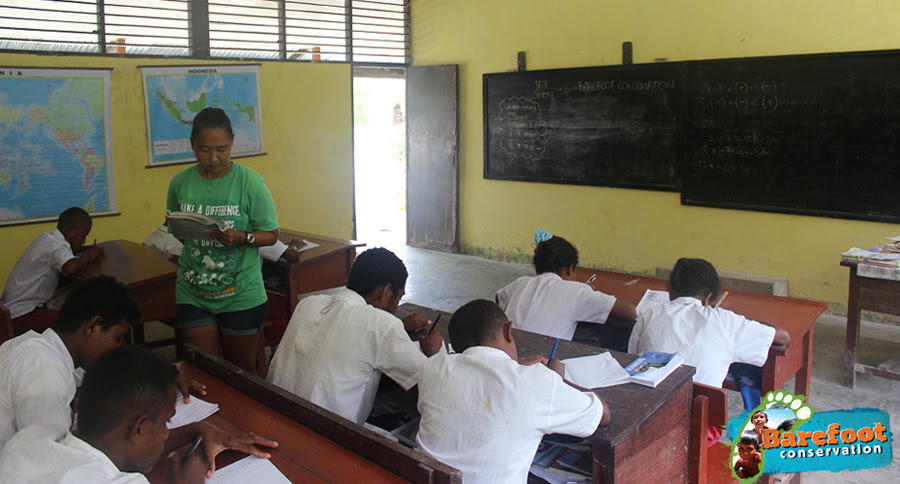
Test out your old fraction knowledge and see if you could solve the equation in the picture below (no calculators allowed as the Yanbuba school kids dont have them!): -

Answer is below, no cheating now.....
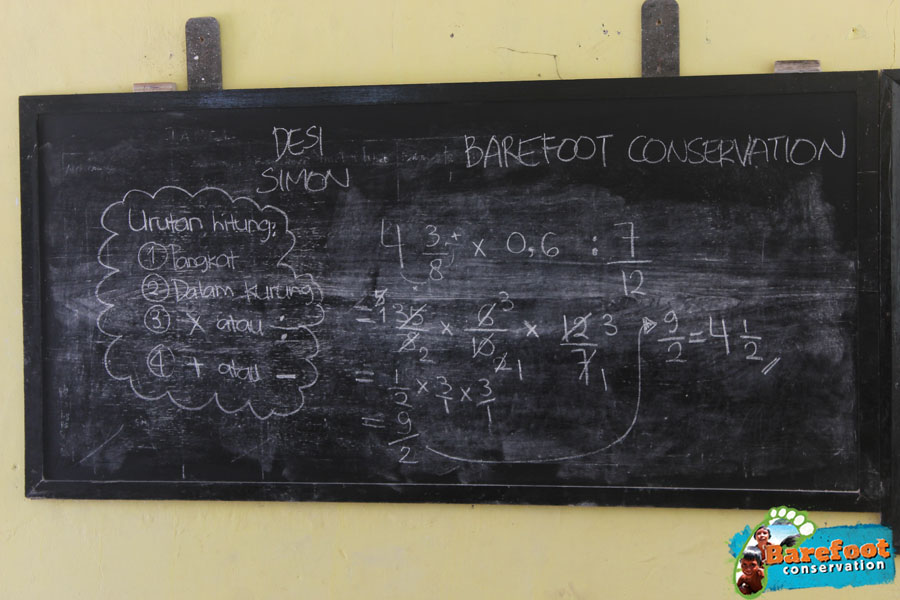
Well done to all of you that got it correct! Ans= 4.5
CREATURE WATCH
Ornate Wobbegon - Orectolobus ornatus
Kingdom: Animalia Phylum: Chordata Class: Chondrichthyes Sub-class: Elasmobranchii Order: Orectolobiformes Family: Orectolobidae Genus: Orectolobus Species: Orectolobus ornatus
Ornate Wobbegon are commonly found on coral reefs but are often over looked by divers because of their highly camouflaged bodies. They are predominantly ambush predators who lye in wait for their pray, so diver’s who aren’t paying attention to where their going had better watch out! Some species of wobbegon have been observed sneaking up on their pray from a distance. They are able to reach a maximum length of approximately 3 meters and are ovoviviparous meaning that eggs are retained within the female shark in a brood chamber where the embryo is able to develop in relative safety feeding on a yolk sac.

Spot the Seahorse
Denise's Pygmy Seahorse - Hippocamus denise
Kingdom: Animalia Phylum: Chordata Class: Actinopterygii Order: Gasterosteiformes Family: Syngnathidae Genus: Hippocampus Species: Hippocampus denise
Most likely due to its tiny size Pygmy seahorses have only been discovered within the last decade and very little is know about them still. Hippocampus denise is one of the smallest species measuring less than 2 cm in height and are thought to only live on certain gorgonian corals namely; Annella reticulata, Muricella and Echinogorgia, at depths ranging from 13–90 m (IUCN Red List). Current thinking suggests that they feed on the tissue of the gorgonian that they live on or on plankton brought to them on currents. Like other seahorses Pygmies are monogamous and ovoviviparous, where the eggs are carried with in the brooding cavity of the male while the female begins a new cycle.

Blacktip Reef Shark- Carcharhinus melanopterus
Kingdom: Animalia Phylum: Chordata Class: Chondrichthyes Sub-class: Elasmobranchii Order: Carcharhiniformes Family: Carcharhinidae Genus: Carcharhinus Species: Carcharhinus melanopterus
A common occurrence around Barefoot Conservation's house reefs, blacktip reef sharks are usually seen gliding in to the distance by survey teams and on occasion have been know to come in for a closer look for a few lucky divers. Blacktips are considered small as far as sharks go reaching up to 1.8 meters in length. Their most distinctive features are the “black tips” on all of their fins, and are one of three sharks commonly seen in the Indo-Pacific, the other two being the grey reef shark, Carcharhinus amblyrhynchos and whitetip reef shark, Triaenodon obesus. Blacktip reef sharks like most species of sharks are hugely vulnerable to depletion because of their long gestation periods and small litter sizes. Typically they mature at eight years for a male and nine for a female who will gestate for about 10 months with a litter size of two to four pups.

Manta Ray Research Programme
The team at Jejak Kaki Konservasi are running a manta ray ID program in Raja Ampat, building up a database on these amazing creatures. Volunteers joining an expedition are highly likely to see manta rays while diving in the area. A common cleaning station for Manta Rays is a short boat trip away, dubbed “Manta Sandy” this is one of the observation sites for our monitoring program.
Volunteers wishing to participate in the program are trained by Jejak Kaki Konservasi Science Officers to recognize key characteristics, markings and behaviors of the gentle giants as well as their ecology, biology and conservation. Mantas are commonly sighted while out on other dives and have even been know to sneak up on unsuspecting project scientists! The manta in the picture below was estimated to have a wing span of 4 to 5 meters and kept volunteers and staff company on their safety stop on a Saturday fun dive at “Blue Magic” (not bad company!)
Mantas Rays, being the largest species of all Rays, are threatened with Extinction. With slow reproductive rates and large number of threats, including the Gill Raker Industry, Direct Fishing, Fishing Bycatch and Boat Strikes, their populations have plummeted over the last 15 years. This increasing threat represented in the up-listing of Manta Rays conservation status from ‘Near Threatened’ to ‘Vulnerable to Extinction’ by the IUCN and a proliferation of protection measures globally to ensure their long-term survival. It is essential that information is gathered on these spectacular creatures to support development of effective conservation measures. Expeditions such as these that gather information on Manta Rays, can help shed light on movement patterns of individuals and vital habitats that they use.
Since 2014 all of Indonesia’s territorial waters have essentially been designated as a protected area for Manta Rays, when national legislation was passed making it illegal to capture these beautiful creatures. This positive move by the Indonesian government has created the largest no take zone for Manta Rays in the world. Even earlier, since 2012 the 8 MPAs in Raja Ampat were designed as a special sanctuary for Rays and Sharks and the habitats they depend on, including the spectacular coral reefs found here. These coral reefs are fortunately still relatively untouched by coral bleaching, which has devastated much of the coral reefs around the world. Yet another sad knock on effect of humans impacts on our climate. Raja Ampats reefs seem to be particularly resilient to temperature changes which has buffered some of the effects. We hope to see this continue as the level of biodiversity and life these reefs hold is breathtaking. Because of these unique conditions volunteers have a good chance of seeing Manta Rays during their expedition and study the individuals they encounter. With both species of Manta Rays being present, the larger more secretive and much less observed Oceanic Manta Ray which can reach up to 7.5m width from wing tip to wing tip, to the smaller but no less spectacular Reef Manta Rays which can reach up to 5m.
All Manta Ray data collected by the marine biologists of Jejak Kaki Konservasi and the Barefoot Conservation volunteers is shared with the local Raja Ampat government departments (BLUD & Marine Fisheries), as well as other Manta Ray NGO's.


A Volunteers Week in Raja Ampat… “Mind Blowing” Just About Covers it…
Having recently graduated from University Bernie Burczak still has a fresh memory of lectures about tropical marine ecology always referring to the coral reef sanctuary that is Raja Ampat. It was not until she dived into the bright blue waters of Arborek Island house reef that she really understood the epic diversity of the underwater paradise slowly unfolding before her. With in a week she has already been lucky enough to encountered; Manta rays, Wobbegons, Black Tip Reef Sharks, Hawksbill Turtles, Bumphead Parrot Fish, Triggerfish, huge schools of Trevally, Nudibranchs, and Pygmy Seahorse’s to name just a few of the amazing creatures spotted.

Bernie Diving in Raja Ampat
Here dive site names can be taken literally- “Blue Magic”, “Manta Sandy” and “Crazy Corner”(Cape Mansaur) are truly other world experiences and may cause serious over stimulation for any biologist or recreational diver alike, due to the extravaganza of life on every dive. Raja Ampat is truly a marine paradise not just for professionals but also for anyone who has the slightest interest in diving or coral reefs. Here, not only do you get the rare opportunity to see amazing creatures almost daily, but you are given the unique chance to understand what your looking at.
With the Science-Training Program (STP) given by the Science Officers of Jejak Kaki Konservasi you are able to learn about some of the animals your find whilst diving, and how they play a key role in the finely balanced ecosystem. Following on from this you are then able to participate in Reef Check surveys on the coral reefs on the surrounding islands with the Jejak Kaki Konservasi science officers. Giving volunteers making up the survey teams the chance to dive sites rarely if ever visited by your average tourist. This project will help local park managers target management strategies to conserve these precious reefs, allowing for future generation to see the beauty that we have been lucky enough to bare witness to.
“You know you’re in an amazing place when sharks are left off the list of cool things you saw on your dive because there were just so many”

Black Tip Reef Shark - Raja Ampat
I knew I was in for a treat when I arrived at Arborek base camp because before I’d even gotten in the water I had seen dolphins and pilot whales on the boat trip to the island. As if this was not enough on arrival at base camp I saw a juvenile black tip reef shark feeding around the stilts of my new house- now a regular occurrence. Although all these animals were amazing the highlight of my out of water experiences has been seeing a Manta Ray breaching nearly a meter out of the water… all of this and I didn’t even need to put on a scuba tank!”

Science Training and Coral Reef Monitoring at Yayasan Jejak Kaki Konservasi
All science training is conducted by the Indonesian Science Officers of Yayasan Jejak Kaki Konservasi, who is our Indonesian project parter in Raja Ampat. A "Yayasan" is the word used for a charitable foundation, in Indonesian. And the words Jejak Kaki Konservasi, mean Foot Print Conservation.
The "Science Training Program" (STP) offers volunteers the opportunity to learn basic coral reef biology and ecology as well as identification of some of the amazing coral, invertebrate, fish and plant species that are commonly spotted throughout Raja Ampat and coral reef across the Indo- Pacific.
Whether you’re a budding marine biologist, avid diver or just someone who wants to try something new, the science program caters to all with an interest in marine ecosystems. Volunteers having participated in the science program often find that their whole diving experience is taken to another level of enjoyment owing to their new understanding and ability to identify what they are seeing.
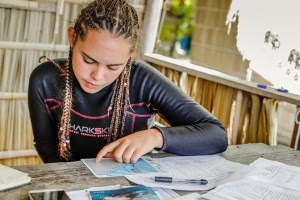
The science program consists of a 1-2 week "Reef Check" course, covering a series of topics through classroom style lessons, where volunteers are given the tools they need to identify reef species. Following on from the “land lessons” are a number of in “water lessons”, where volunteers and trained members of Jejak Kaki Konservasi staff dive together, testing and refining their newly acquired identification skills, discussing any difficulties and celebrating successes following the dive.
Having completed the science training program, volunteers are able to join the Jejak Kaki Konservasi reef survey and monitoring teams, who conduct numerous research dives across many of Raja Ampats amazing coral reefs. This helps Jejak Kaki Konservasi to achieve one of their goals, which is to assist local government and communities to conserve and protect the coral reefs of Raja Ampat.
Jejak Kaki Konservai works in collaboration with NGO Reef Check Indonesia, and are the only Yayasan/Organisation performing these kind of Reef Check Surveys in Raja Ampat.
PROMOTIONS
At Barefoot Conservation we love a good promotion and want to start spring 2020 off in style with these great promo's which gives you the chance to save money on expedition and liveaboard fees:-
-
20% discount off all 2020 Liveaboard trips, if booking made before the 31st August 2020

This promotion is for all you last minute bookers who want to get away this winter.
If you join any of our 2020 Liveaboard trips, your get a massive 20% off the advertised price!
-
10% discount off all 2020 expeditions, if booking made before the 31st August 2020

Have you already decided to join one of our later 2020 expeditions, but not yet booked? Well get in quick and save 10%
If you book and pay your deposit before the 31st August 2020, for any future expedition in 2020, your earn yourself a 10% discount off the expedition fee! So what are you waiting for? Fill in your online booking form today and save £££'s.
-
15% discount off all 2021 Liveaboard trips, if booking made before the 31st August 2020
This promotion is for all you early bird bookers, looking to book early and get a 2021 bargain!
If you join any of our 2021 Liveaboard trips, your get a big 15% discount off the advertised price!
-
FREE PADI Divemaster course when you sign up for a 12 week or more expedition
 Want to take the first steps to becoming a PADI professional and a PADI Instructor? Then why not sign up for a 12 week or more expedition and get a FREE PADI Divemaster course worth over £350.
Please email for more information on our promotions
Our basecamp on Arborek Island - Raja Ampat

Barefoot Conservation Community Projects
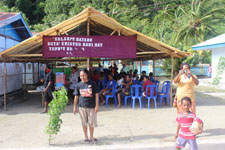 The community projects that you will be involved with have been designed by Barefoot Conservation, in conjunction with the local community and government. Through regular meetings between Barefoot Conservation and local stakeholders, including government, elders, women, school groups, fisherman, farmers, and many others, community projects are designed to meet urgent and long-term needs, while fulfilling the goals of the expedition, which include:
- Undertake educational programmes on environmental issues, sustainable fishing techniques and the economic benefits of marine protected areas.
- Increase quality of life and alleviate poverty in local communities.
- Encourage entrepreneurial attitudes to deter from unsustainable destructive activities like shark finning or dynamite fishing.
- Research the effects of Climate Change on coastal communities.
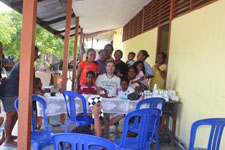 These projects are entirely funded by the fee that volunteers pay, and will cover a wide range of issues that the local community is facing. Some will be urgently needed and others may be more long term educational or quality of life issues. The progress of these projects will be monitored and evaluated over time to demonstrate how they contribute to the greater goals of both the local community and Barefoot Conservation. This will allow us to scale up projects that are having the biggest impact and to re-evaluate and redesign the less effective ones.
These projects will evolve over time as certain needs are met and others arise. As we grow as an organisation, we hope to expand our work from the island of Mansoear into neighbouring communities.
Volunteers could be involved with teaching English to the school children  and other community members, river and beach clean ups, our renewable energy programme, climate change research, livelihood diversification workshops, our community medical clinic and providing education on environmental issues and eco-tourism to name but a few.
